Missing teeth can affect more than your smile. They can change the way you chew, speak, bite and feel in everyday moments. Dental implants offer a stable, natural-looking way to replace missing teeth and restore confidence in your smile. At the North Canton dental office of Dr. Julie Thomas, we help patients from North Canton, Canton and nearby Stark County communities understand their tooth replacement options and plan care that supports long-term oral health.
Whether you are missing one tooth, several teeth or an entire arch, dental implants may provide a secure foundation for a crown, bridge or full-arch restoration. Our team will evaluate your smile, explain your options and help you decide whether implants are the right solution for your needs. Call 330-244-9081 to schedule a dental implant consultation.
Dental Implants Near Canton and North Canton
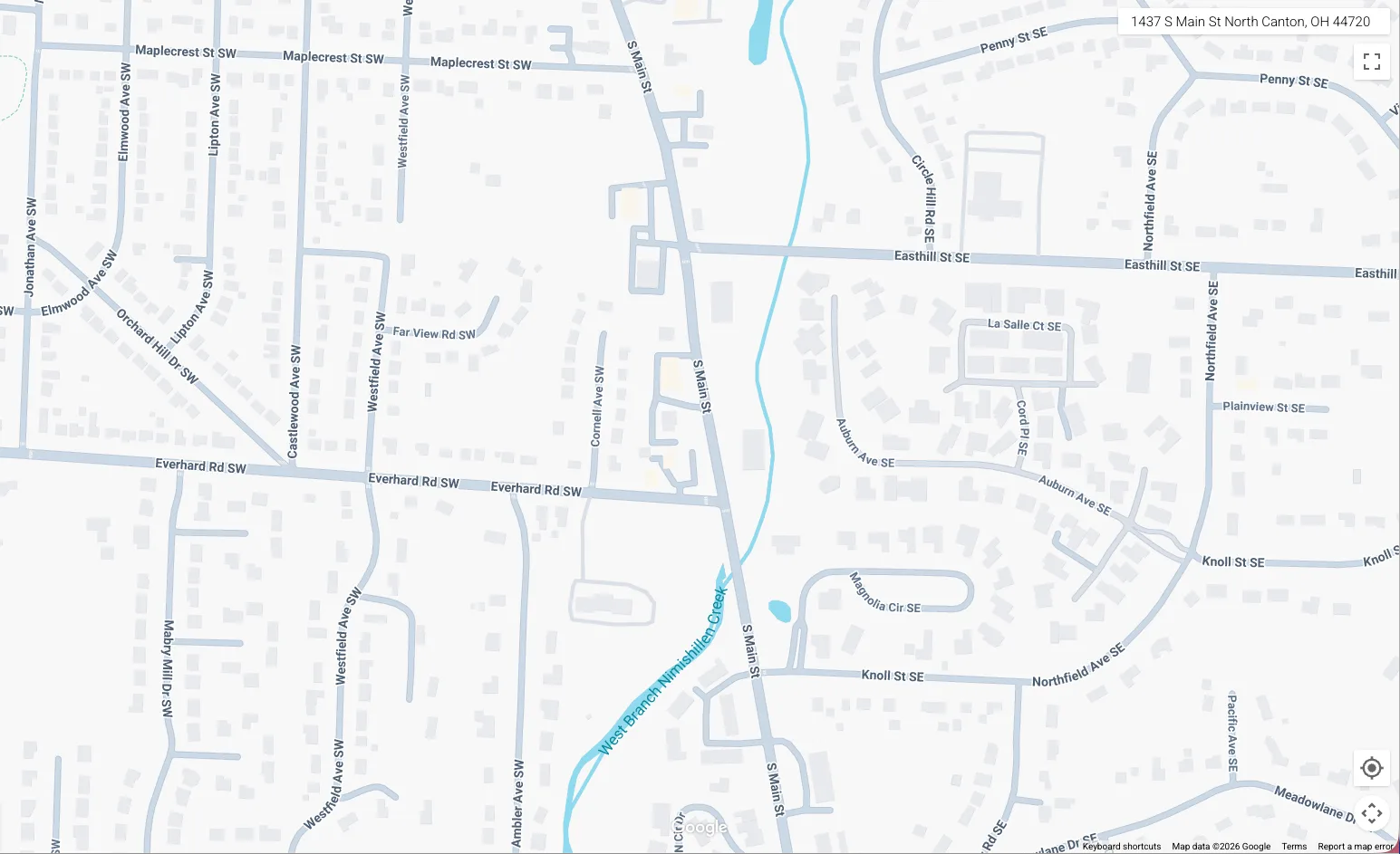
Our office is located at 1437 S. Main St. in North Canton, making implant consultations convenient for patients searching for dental implants near Canton, North Canton, Belden Village, Plain Township and surrounding areas. Dr. Julie Thomas has practiced in North Canton since 1992 and opened her current South Main Street office in 2003.
Dental implant treatment requires careful planning. Dr. Julie Thomas completed an advanced general dentistry residency at The Ohio State University and provides comprehensive restorative care, including crowns, veneers, full-mouth restorations and neuromuscular dentistry. This experience supports a whole-mouth approach to implant treatment, including how your replacement teeth will look, feel and function with your bite.
What Are Dental Implants?
A dental implant is a small biocompatible post that replaces the root of a missing tooth. Once the implant is placed in the jaw and has had time to integrate with the bone, it can support a custom restoration. Depending on your needs, that restoration may be a dental crown, bridge, denture or full-arch prosthesis.
Dental implants are designed to stay fixed in place, unlike removable tooth replacement options. Because the implant helps stimulate the jawbone, it can also help reduce the bone loss that often occurs after a tooth is lost. For many patients, implants feel more like natural teeth than traditional removable appliances.
What Dental Implants Can Replace
Implants can be used in several different ways, depending on how many teeth are missing and where they are located. Your treatment plan may include:
- A single implant with a crown to replace one missing tooth
- An implant-supported bridge to replace several missing teeth in a row
- Implant-supported dentures for improved stability
- Full-arch implant restorations for patients missing most or all teeth
- Tooth replacement planning after an extraction
If you are comparing implant options, we can help you understand whether dental implants, All-on-4 implants, a bridge, denture or another restorative dentistry solution best fits your goals.
When Dental Implants May Be Recommended
Dental implants may be recommended for adults who want a long-term tooth replacement option and have healthy enough gums and bone to support treatment. They may be a good fit if you want a replacement tooth that does not rely on neighboring teeth for support, or if you want a more stable alternative to removable dentures.
Implants may be considered after tooth loss from decay, gum disease, injury, infection or extraction. If you need a tooth removed first, our team can also discuss how tooth extraction and implant planning may work together. In some cases, bone grafting or additional treatment may be needed before an implant can be placed.
Benefits of Dental Implants
Dental implants are popular because they replace both the visible tooth and the missing root structure. When planned carefully and maintained properly, they can offer several advantages:
- Stable chewing function for everyday meals
- A natural-looking replacement tooth or restoration
- Support for jawbone health after tooth loss
- No need to reshape healthy neighboring teeth for support
- Improved confidence when speaking, smiling and laughing
- Options for replacing one tooth, several teeth or a full arch
- Long-term value with good home care and professional maintenance
Because every patient's mouth is different, the best way to understand your potential benefits is to schedule a consultation and review your specific needs.
Dental Implants vs. Bridges and Dentures
Many patients compare implants with bridges or dentures before choosing treatment. A traditional bridge can replace a missing tooth by using neighboring teeth for support. This may be appropriate for some patients, but it typically requires reshaping those supporting teeth. A dental implant replaces the missing tooth root and supports the restoration independently.
Removable dentures can replace several or all missing teeth, but they may shift while eating or speaking. Implant-supported dentures can improve stability by attaching to dental implants. If you are frustrated with loose dentures or worried about missing teeth affecting your bite, an implant consultation can help you compare your options clearly.
What to Expect During the Dental Implant Process
The dental implant process begins with a detailed consultation. We will review your health history, examine your teeth and gums, and use appropriate imaging to evaluate the bone and surrounding structures. This helps determine whether implants are recommended and whether any preparatory care is needed.
If an implant is a good fit, treatment is planned around your anatomy, bite and final restoration. Some patients need a tooth extracted before implant placement. When conditions are appropriate, certain steps may be coordinated efficiently, but timing depends on your health, bone support and treatment plan.
After the implant is placed, healing time allows the implant to integrate with the bone. Once the area is ready, the implant can be restored with a crown, bridge or other prosthetic option. We will explain the expected timeline before treatment begins so you know what to expect.
Are You a Candidate for Dental Implants?
You may be a candidate for dental implants if you have one or more missing teeth, healthy gums and enough bone to support an implant. Good candidates are also committed to daily brushing, flossing and routine dental visits, because implants need healthy surrounding tissues to last.
Some patients need additional care before implant treatment. Gum disease, untreated decay, smoking, certain medical conditions or low bone volume can affect treatment planning. If you are not ready for implants right away, we will explain what steps may help prepare your mouth for future tooth replacement.
Dental Implant Restorations and Smile Design
The implant post is only one part of treatment. The final restoration is what you see when you smile and use when you chew. Dr. Thomas takes time to consider the shape, shade, size and bite relationship of your implant restoration so it blends with your smile and functions comfortably.
If you have several missing, damaged or worn teeth, your implant plan may be part of a larger treatment approach. Patients with more complex needs may benefit from learning about full-mouth reconstruction. If appearance is also a priority, we may coordinate implant planning with cosmetic dentistry services for a more complete result.
How to Care for Dental Implants
Dental implants are not vulnerable to cavities the way natural teeth are, but the gums and bone around them still need consistent care. Brush and floss daily, follow any special cleaning instructions and keep routine dental visits so your team can monitor your implant and surrounding tissues.
Avoid using your teeth to open packages or bite hard objects, and tell us if you clench or grind your teeth. In some cases, a night guard may be recommended to help protect your implant restoration and natural teeth from excess pressure.
Why Choose Dr. Thomas for Dental Implant Care?
Dental implant treatment should be planned with your whole smile in mind. Dr. Thomas has cared for patients in North Canton for more than three decades and brings advanced general dentistry training to restorative treatment planning. Her approach considers the health of your gums and bone, the function of your bite and the appearance of your final restoration.
Our office welcomes patients from North Canton, Canton and surrounding Stark County communities who want a stable, natural-looking way to replace missing teeth. Before your visit, you can explore our patient reviews, review financial options or contact our team through our contact page.
Frequently Asked Questions About Dental Implants
How long do dental implants last?
With good home care and routine professional visits, dental implants can last many years. The crown, bridge or prosthesis attached to the implant may need maintenance or replacement over time because of normal wear. We will explain how to protect your implant and restoration before treatment begins.
Does getting a dental implant hurt?
Local anesthesia is used to keep you comfortable during implant placement. Some soreness, swelling or tenderness can occur after the procedure, but many patients find recovery manageable with proper instructions. Our dentist will explain what to expect and how to care for the area while it heals.
Am I a candidate for dental implants?
You may be a candidate if you have healthy gums, enough bone support and one or more missing teeth. A consultation is needed to know for sure. If you have bone loss, gum disease or other concerns, additional treatment may be recommended before implant placement.
How do implants compare to bridges or dentures?
Implants are fixed in the jaw and do not rely on neighboring teeth for support. Bridges can be effective but usually depend on adjacent teeth, while removable dentures may shift during eating or speaking. Implants often provide a more stable, natural-feeling option for qualified patients.
How long does dental implant treatment take?
The timeline varies by patient. Many cases take several months because the implant needs time to integrate with the bone before the final restoration is placed. Some steps may be coordinated efficiently when appropriate, but your timeline will depend on your bone, health and treatment needs.
Can I get an implant after a tooth extraction?
Yes, dental implants are often considered after a tooth is removed. The timing depends on the condition of the tooth, surrounding bone, gums and overall treatment plan. Some patients may need bone grafting or healing time before implant placement. We will explain your options during your evaluation.
Do you see patients from Canton for dental implants?
Yes. Our office is located in North Canton and welcomes patients from Canton, Belden Village, Plain Township and nearby Stark County communities. Patients searching for dental implants near Canton, OH can schedule a consultation with our dentist.
Schedule a Dental Implant Consultation in North Canton, OH
If you are ready to replace missing teeth with a stable, natural-looking solution, our team is here to help you understand your options. Dr. Thomas provides dental implant planning and restorative care in North Canton, OH, for patients from North Canton, Canton and surrounding Stark County areas. Call 330-244-9081 or visit our contact page to schedule your dental implant consultation.